About Friedreich’s ataxia
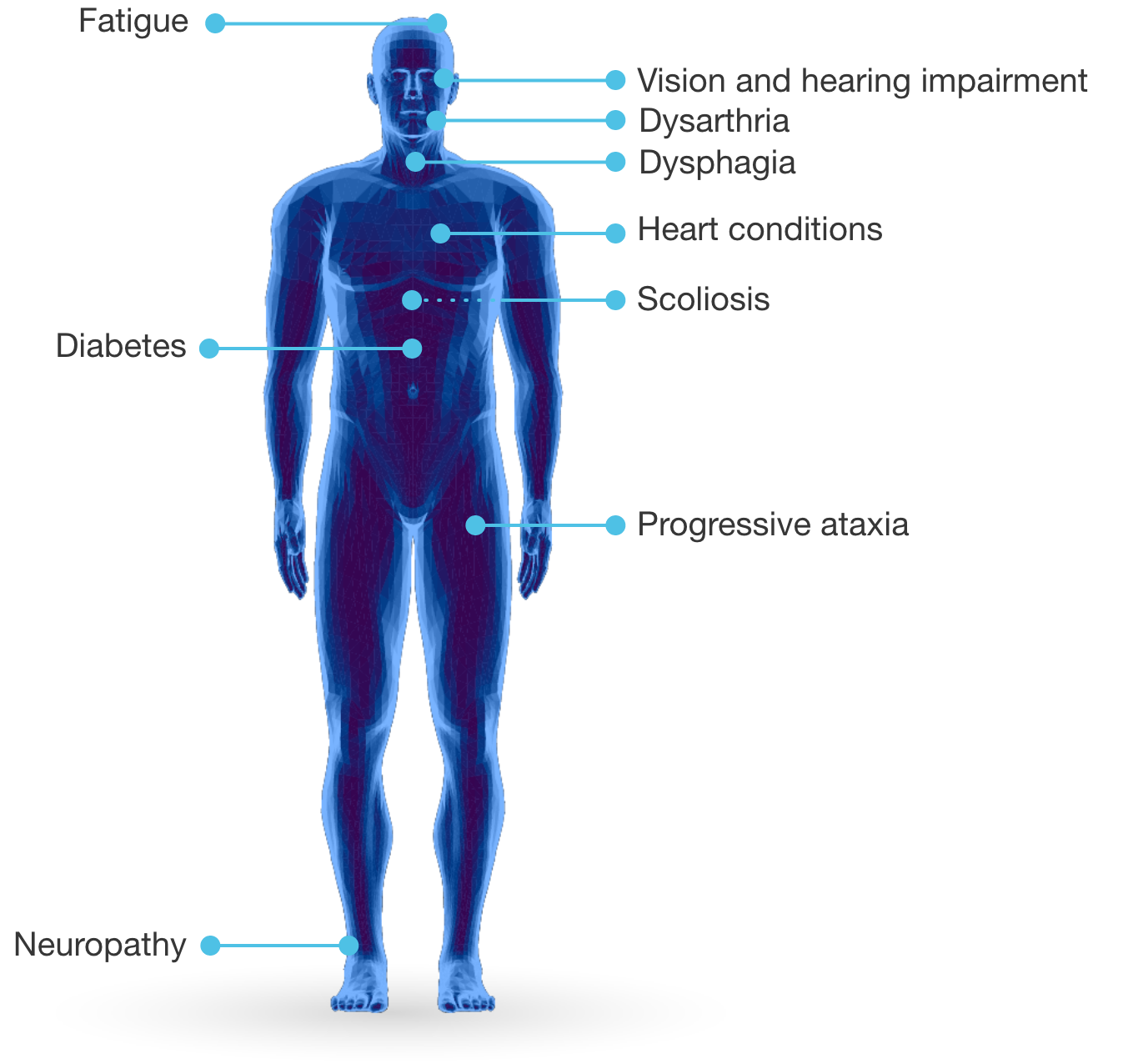
Friedreich’s ataxia (FA) is a rare, progressive disease that affects multiple parts of the body.1

Friedreich’s ataxia (FA) is a rare, progressive disease that affects multiple parts of the body.1

FA is caused by a deficiency in the protein frataxin, which plays a key role in cellular metabolism and is present in all tissues, including the nervous system and heart.1
People with FA typically have a reduction in frataxin levels down to 4% to 29% of levels seen in healthy individuals.2 This deficiency leads to oxidative stress, iron maldistribution, iron accumulation, and cellular dysfunction.1,3
FA affects 1 in every 40,000 people globally and approximately 5000 in the United States.4-6
Symptoms of FA typically appear between the ages of 5 and 20 years and sometimes can present in patients as late as their 60s.1 The most common signs of FA are progressive symptoms of ataxia, hypertrophic cardiomyopathy, and scoliosis that typically present with a constellation of other disease sequelae.2,7
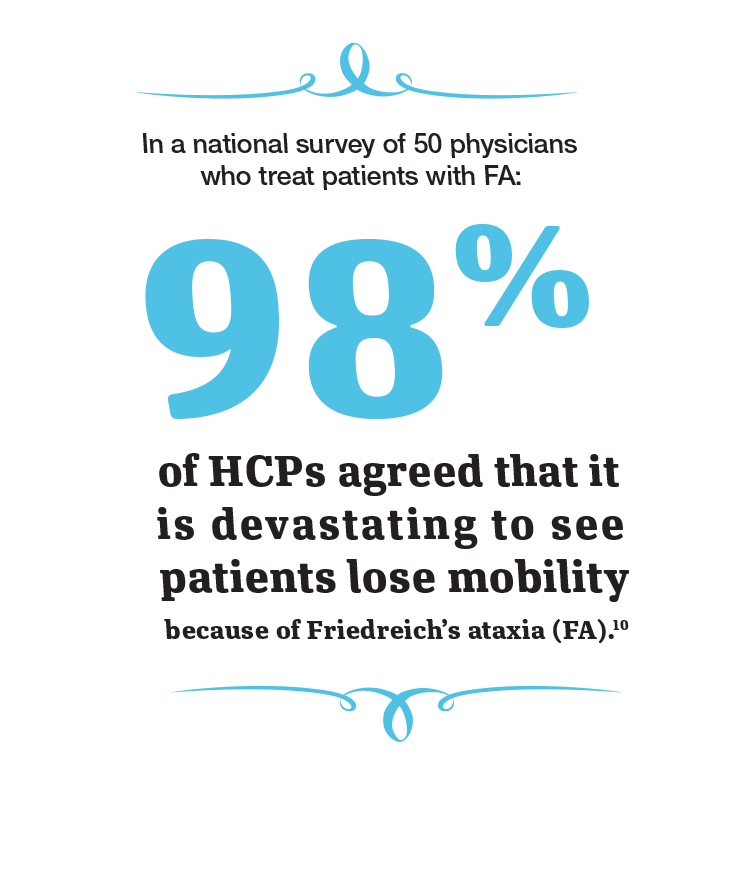
FA is a debilitating disease. Most patients with FA will transition through a series of mobility devices, such as canes, walkers, and wheelchairs throughout their life. As the disease continues to progress, patients may become completely incapacitated.8 However, patients with late-onset disease tend to have a better prognosis and may remain ambulatory with a normal life span.9
Cardiac complications are the leading cause of mortality for patients with FA.1