Managing Friedreich’s ataxia
Integrating disease assessment tools with multidisciplinary insights can help monitor progression and optimize patient outcomes.

Integrating disease assessment tools with multidisciplinary insights can help monitor progression and optimize patient outcomes.
There are a variety of tools and assessments used to measure the progression and severity of FA, including mobility tests and quality of life assessments.1-3
Common tools used to evaluate FA include1-3
mFARS comprises 4 subscale assessments developed to measure neurologic function over time: bulbar, upper limb coordination, lower limb coordination, and upright stability2,4
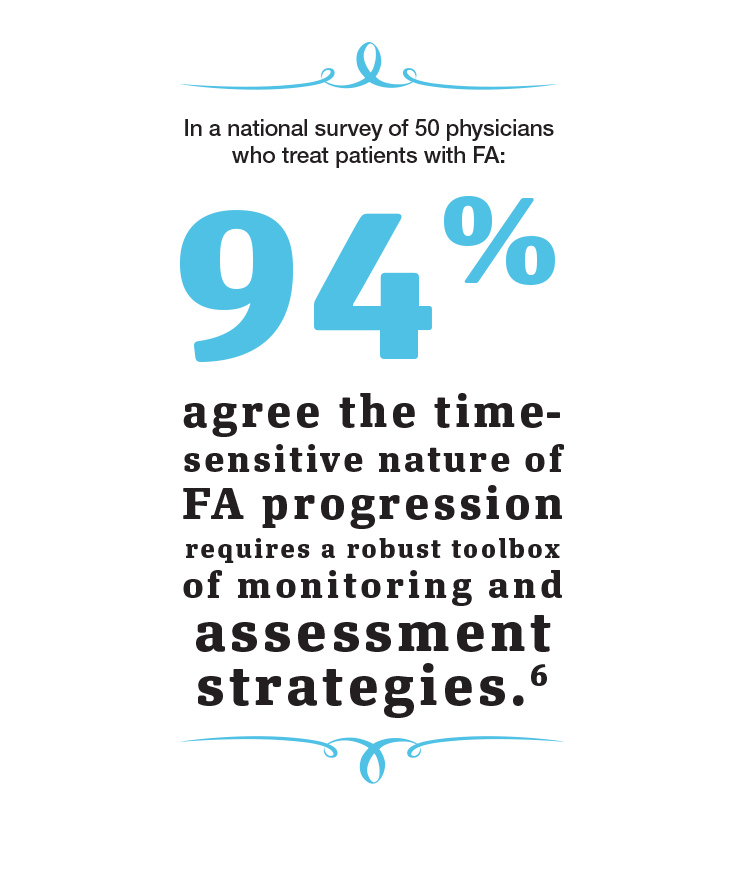
In a national survey of 50 physicians who treat patients with FA: 94% agree the time-sensitive nature of FA progression requires a robust toolbox of monitoring and assessment strategies.6

Recognizing the range of specialists involved in FA management is essential for ensuring coordinated, patient-centered care. Due to the multisystem nature of the disease, effective treatment depends on communication among providers—neurologists, cardiologists, therapists, and others—so that interventions are aligned and complications are addressed proactively.7







Research is ongoing to help develop treatments that address the root cause of the disease—frataxin deficiency—and not just the downstream effects.8
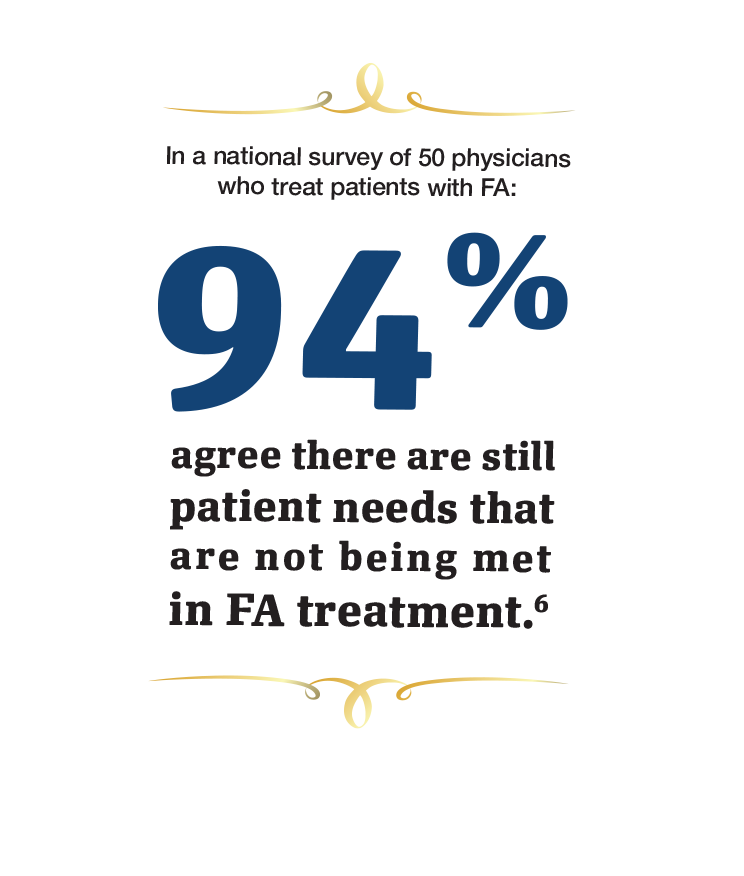
In a national survey of 50 physicians who treat patients with FA: 94% agree there are still patient needs that are not being met in FA treatment.6

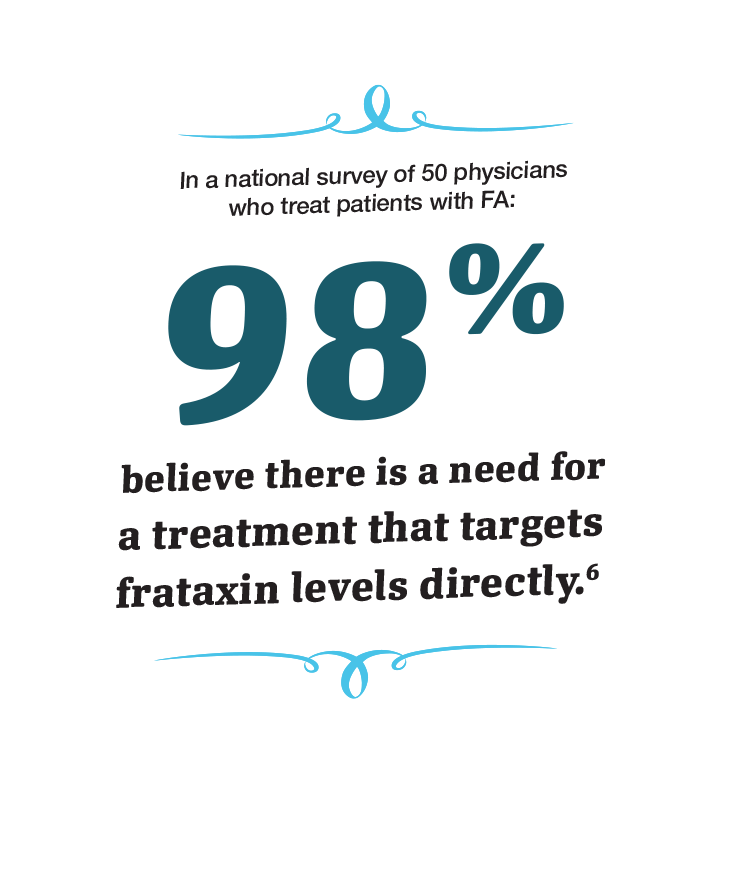
In a national survey of 50 physicians who treat patients with FA: 98% believe there is a need for a treatment that targets frataxia levels directly.6


The Friedreich’s Ataxia Research Alliance (FARA) is a national, public, 501(c)(3), nonprofit organization dedicated to the pursuit of scientific research leading to treatments and a cure for Friedreich’s ataxia.

The National Organization for Rare Disorders (NORD®)* is an independent, 501(c)(3) nonprofit dedicated to individuals with rare diseases and the organizations that serve them.
The National Ataxia Foundation (NAF) is a nonprofit organization dedicated to accelerating the development of treatments and a cure while working to improve the lives of those living with ataxia.
*NORD and the NORD logo are registered trademarks of the National Organization for Rare Disease. NORD is a registered 501(c)(3) charity.