About Friedreich's ataxia
Friedreich’s ataxia (FA) is a rare, progressive disease that affects multiple parts of the body.1

Friedreich’s ataxia (FA) is a rare, progressive disease that affects multiple parts of the body.1
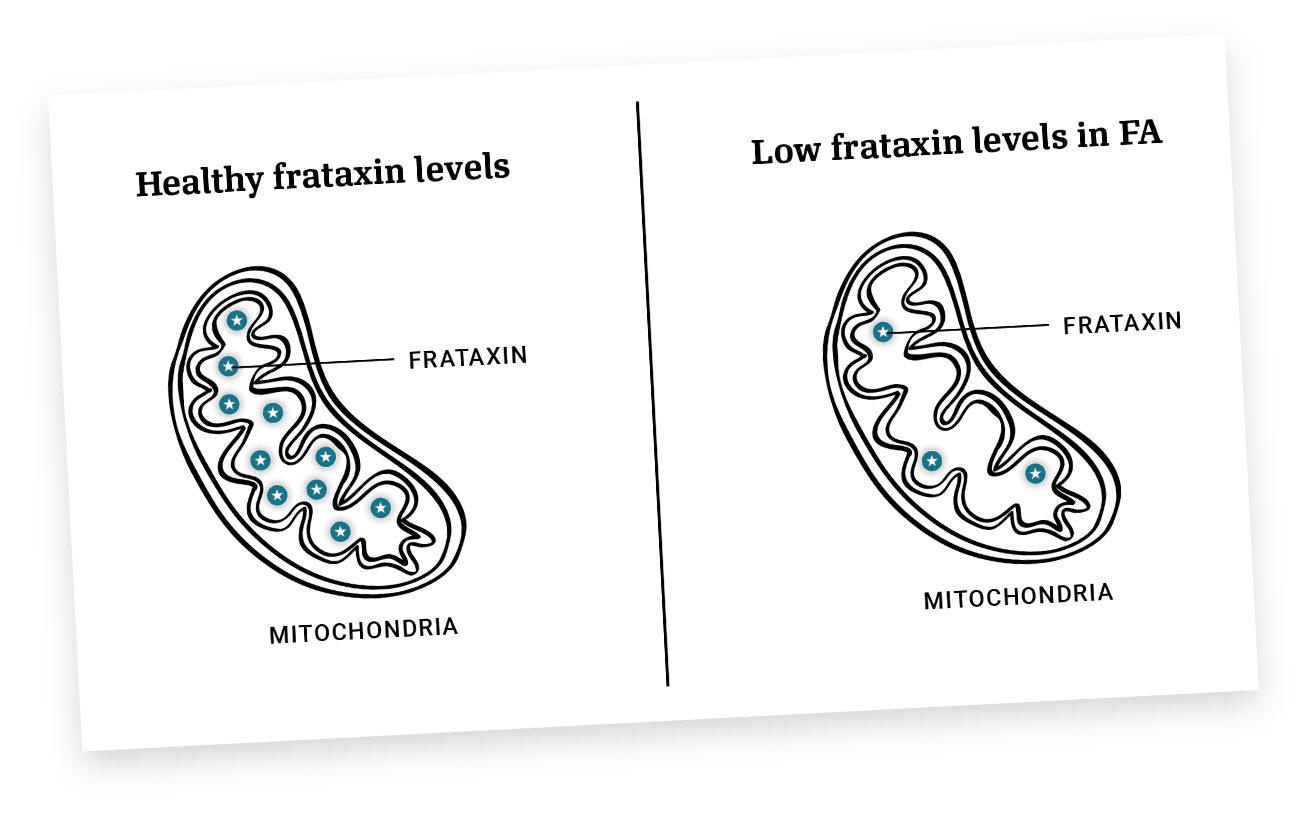
FA is caused by a deficiency in frataxin, a key protein that supports the production of energy for multiple systems in the body, including the nervous system and heart.1,2 With decreased frataxin, the cells in the body are less able to make the energy the body needs to function.2
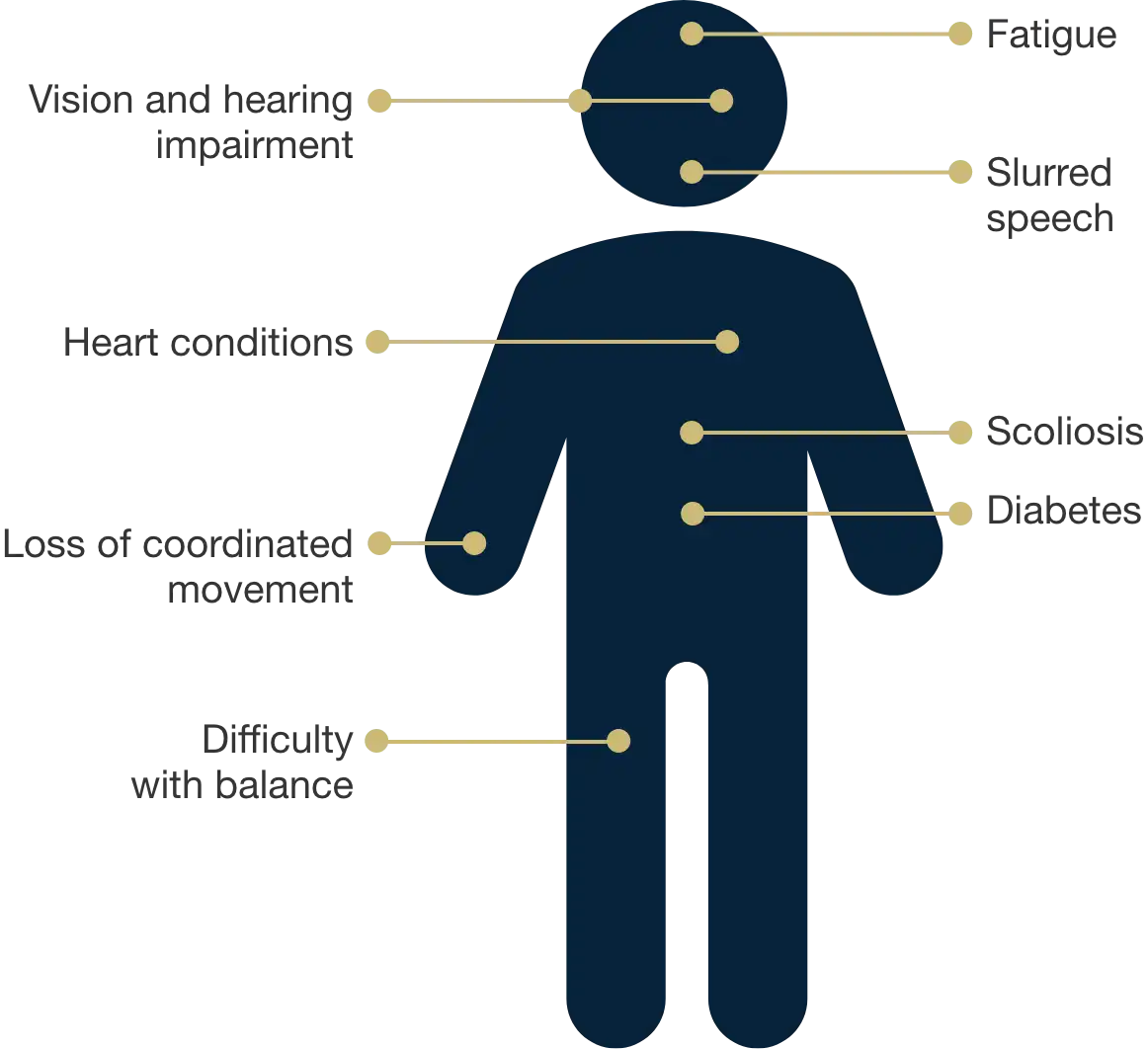
Due to the multisystem nature of FA, a wide range of symptoms can occur.1 Whether you suspect FA or have already received an official diagnosis, you may notice the following symptoms3:
Most people begin experiencing symptoms between the ages of 5 and 20 years, and although it is rare, it’s possible for symptoms of FA to appear in some people as late as in their 60s.1
People who show symptoms of FA earlier tend to have increased disease severity, and their disease may progress faster than those who start experiencing symptoms later in life.4
FA is a progressive disease, which means it will continue to advance as time passes.5 Signs of ataxia, or loss of coordination, are the most common symptoms.1 People with FA may have difficulty standing and running that later progresses throughout their body, leading to difficulty sitting up and decreased motor coordination in the arms and hands.6
As the lack of frataxin continues to take a toll on the body, other symptoms may develop, such as1,5
Scoliosis
Foot problems
Slurred speech
Vision and hearing loss
Heart conditions
As time goes on, daily activities may become increasingly difficult and require assistance. Most people with FA will transition through a series of mobility devices, such as canes, walkers, and wheelchairs throughout their life.2,3